FRISTAM Pumpen Schaumburg
Home
FRISTAM Pumpen Schaumburg develops the VPS series – precise, durable single-flow screw pumps for demanding conveying and dosing processes. As robust positive displacement pumps, they are suitable for chemicals, oil & gas, abrasive media and a wide range of industrial process applications.
also with solids
for oil, gas and chemicals
and pressure-resistant
Select the relevant industry or application and discover typical areas of use for the VPS series – from chemicals and oil & gas to petrochemicals and tank terminal applications. The pumps can be individually configured for the medium, process and operating conditions.
Reliable process pumps are required for the production of industrial consumer products in basic, fine and specialty chemicals – across a wide range of flow rates, pressures and conveying conditions. Plastics, paints, adhesives and base materials for the pharmaceutical, cosmetics and food industries are just some of the end products made from the processed materials.
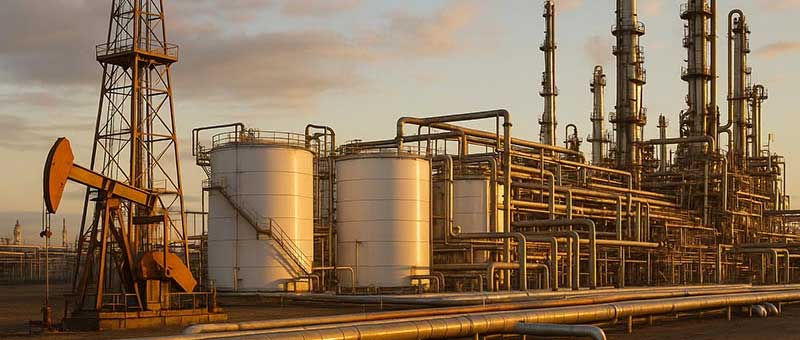
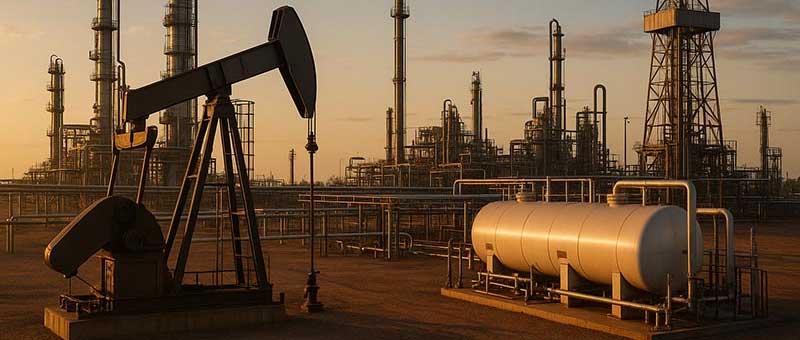
In the oil and gas sector, single-flow screw pumps are ideal for pressure boosting and for transporting crude oil, natural gas and associated substances such as formation water. Thanks to the contact-free operation of the conveying elements, they are highly suitable for conveying fluids with different viscosities, varying gas contents and even solids content or highly corrosive formation water.
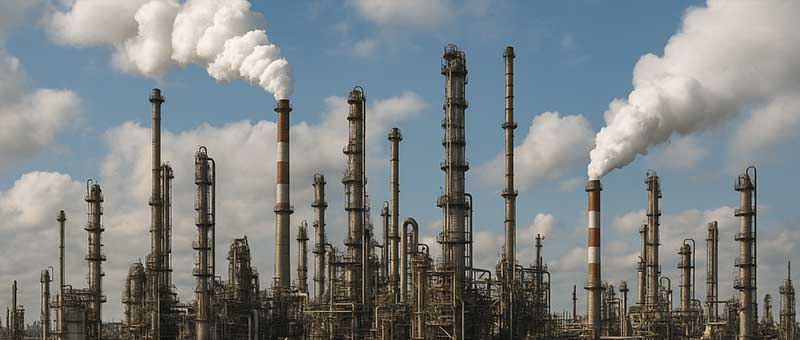
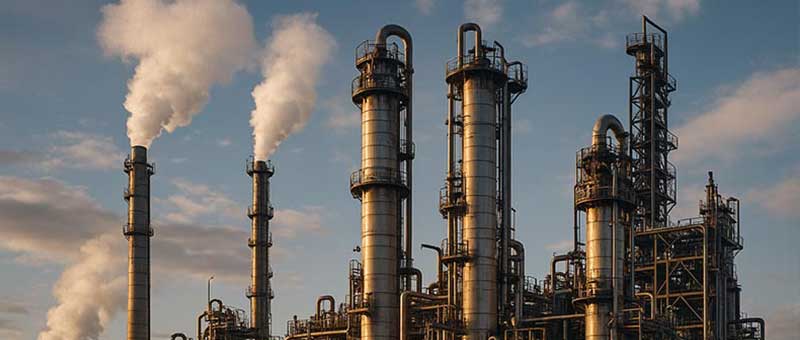
Where crude oil and natural gas are converted into chemical products and chemical base compounds are supplied for the production of further chemical products, pumps must be absolutely tight, durable and low-maintenance. Changing pressure conditions and solids content are key challenges and require a particularly reliable, trouble-free pump.
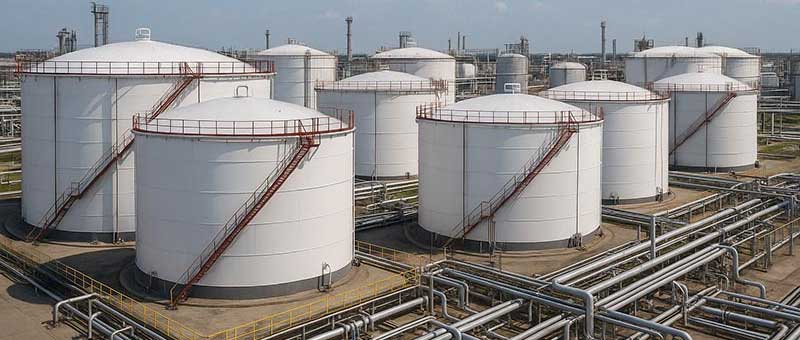
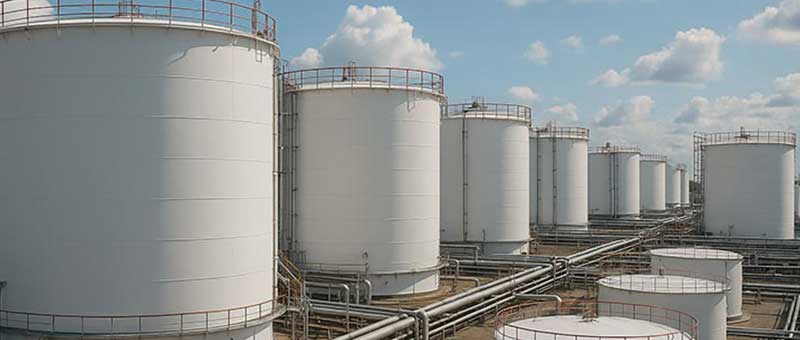
Tank terminals are used to store fuels and also serve as strategic oil reserves. Tanks generally store products such as gasoline, heating oil, heavy fuel oil and various chemicals. The pumps used must offer particularly good suction properties to ensure complete emptying of tanks or trucks.
Single-flow screw pumps are compact, rotating positive displacement pumps that stand out thanks to their robust design, easy maintenance and reliable conveying performance. They are particularly suitable for media with high viscosity or gas content and enable gentle, low-pulsation and continuous conveying.
Thanks to their flexible design, they are used in numerous industries – from chemicals and oil and gas to petrochemicals and tank terminal applications.
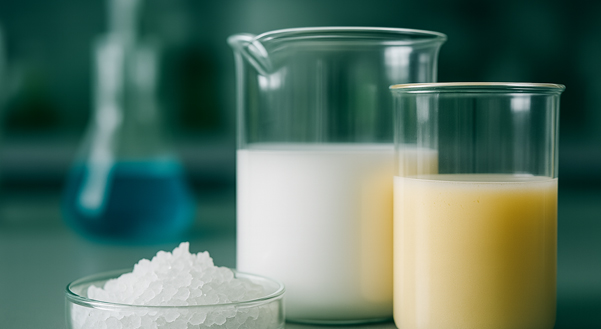
In the field of alkane sulfonates, salts and emulsions, which are used in detergents and cleaning agents, as antistatic agents for plastics or in cosmetics, product-friendly conveying is essential. Pumps must cover a wide range of requirements and operate across different viscosity and suction pressure ranges.
| Temperature range: | 8–110 °C |
| Viscosity: | 150–3,500 mm²/s |
| Flow rate: | 1–7 m³/h |
| Suction pressure: | -0.2 to 0.5 bar |
| Differential pressure: | 6.0 bar |
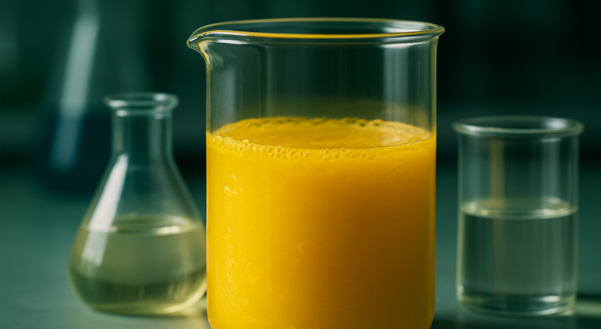
When conveying liquid sulfur, maintaining the exact conveying temperature is extremely important. If the sulfur hardens in the pump, it is very difficult to liquefy or remove again. This can lead to increased wear or even damage to the mechanical seal. Thanks to a heating jacket in the housing, the pump can be heated completely and evenly, preventing permanent deposits of liquid sulfur.
| Temperature range: | 135–140 °C |
| Viscosity: | 7.75 mm²/s |
| Flow rate: | 60–90 m³/h |
| Suction pressure: | -0.5 bar |
| Differential pressure: | 6.3 bar |
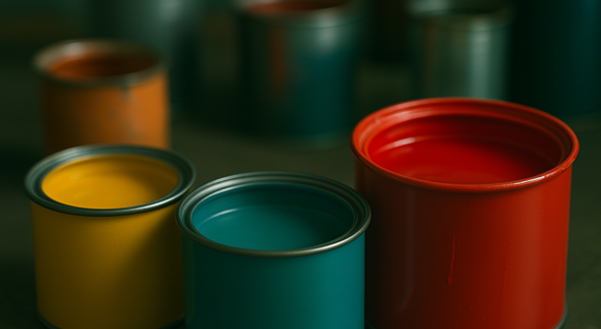
In the field of paints, coatings and glazes, a wide range of additives is used, including pigments, binders and solvents. Due to the use of resins and plasticizers, the pump must be resistant to the pumped media and silicone-free. During conveying, low-pulsation and gentle operation are essential. Good cleanability and a dead-space-free design are also important to ensure that residues can be completely removed.
| Temperature range: | 10–30 °C |
| Viscosity: | 50 mm²/s |
| Flow rate: | 15 m³/h |
| Suction pressure: | -0.3 bar |
| Differential pressure: | 4 bar |
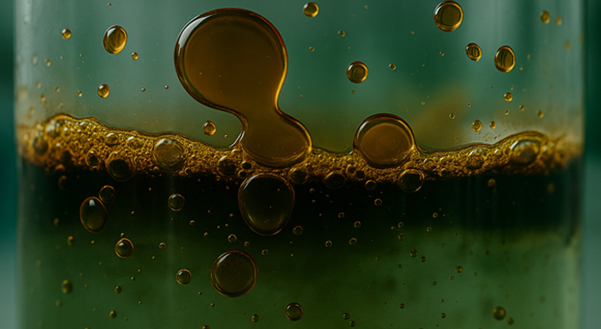
With multiphase mixtures, the pump must respond flexibly to changing gas and liquid proportions in the process as well as the resulting pressure and viscosity fluctuations. A multiphase pump can reduce riser and wellhead pressure by working against the differential pressure of the downstream pipelines to the separator station. The improved flow properties of the crude oil from the reservoir into the well enable production to increase by around 20 to 25 percent. This technology extends the service life of the entire well equipment and can even make it possible to operate wells economically again after they have already been taken out of service.
| Number of wells connected to the VPS on the suction side: | 3 |
| Lift system: | Downhole / piston pumps |
| Suction pressure / wellhead pressure: | 2 bar(g) |
| Outlet pressure: | 3 bar(g) / 15 bar(g) |
| Differential pressure: | 9 bar |
| Capacity: | 30 m³/day liquid (80 % oil, 20 % water) 4,000 sm³/day gas |
| Volume flow: | 35 m³/h |
| Gas fraction: | 92 % |
| Medium temperature: | 10–15 °C |
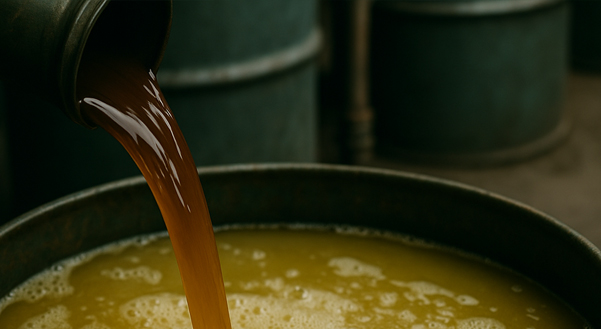
In the field of crude oil and formation water, the challenge for a pump is to convey with as little pulsation and shear as possible in order to avoid remixing pre-separated crude oil with the remaining formation water.
| Temperature range: | 40–50 °C |
| Viscosity: | 1–100 mPas |
| Flow rate: | 3–15 m³/h |
| Differential pressure: | 7 bar |
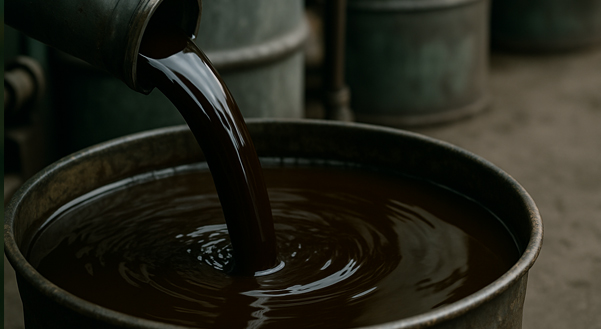
During crude oil production, formation water is produced in varying proportions and should not be mixed with the oil. In the wet oil tank, the crude oil-water mixture settles: the formation water moves downward, while the oil rises due to its lower density. The single-flow screw pump, used as a skim oil pump, gently draws off the oil from above and transfers it to the clean oil tank.
| Temperature range: | 45 °C |
| Viscosity: | 50 mPas |
| Flow rate: | 1.5–5 m³/h |
| Differential pressure: | 6 bar |
Heavy oils (HFO = Heavy Fuel Oil) have a particularly high density of over 900 kg/m³ at 15 °C and varying viscosity. Bitumen, for example, has elastoviscous behavior that changes with temperature. The pump housing is therefore equipped with an integrated heating jacket. Thanks to the constant temperature, low-pulsation conveying at consistent viscosity is possible.
| Temperature range: | 30–140 °C |
| Viscosity: | 5–200–380 mPas |
| Flow rate: | 33–90 m³/h |
| Suction pressure: | -0.4 bar |
| Differential pressure: | 5.4 bar |
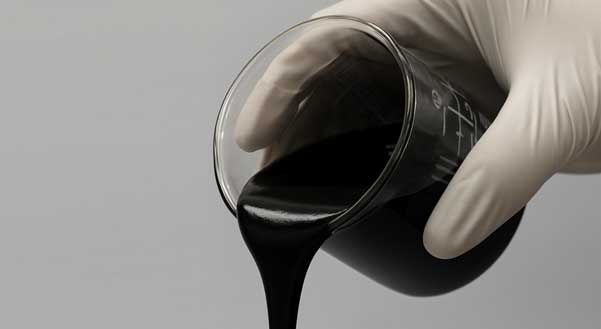
In vacuum distillation, the residue from crude oil distillation is redistilled. The products obtained include vacuum gas oil, various distillates and vacuum residue as a heavy fuel oil or bitumen component. The main challenge for the pump is highly fluctuating pressure conditions during conveying.
| Temperature range: | 150–135 °C |
| Viscosity: | 25–5 mPas |
| Flow rate: | 16–18 m³/h |
| Differential pressure: | 10 bar |
| Particle size: | 2 mm |
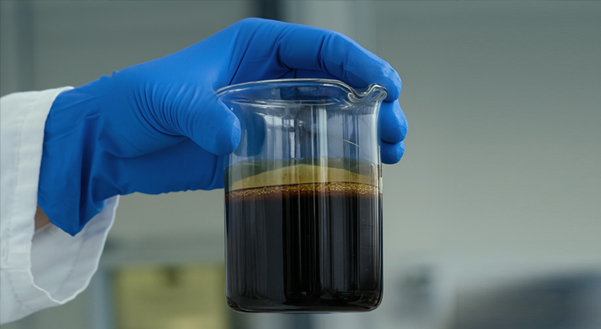
Pyrolysis oil remains after ethylene production in the steam cracker and is used for the production of carbon black, as an auxiliary material in the chemical industry and as a raw material for distillation, particularly of naphthalene and indene. Pyrolysis oil is a viscous, with an aromatic odor, naphthalene-rich, black-brown oil with solids content of up to five percent in some cases. Changing conveying conditions and solids content are the key challenges for the pump.
| Temperature range: | 90–110 °C |
| Viscosity: | 25–5 mPas |
| Flow rate: | 16–18 m³/h |
| Differential pressure: | 10 bar |
| Solids content: | 1 % coke particles |
| Particle size: | 2 mm |
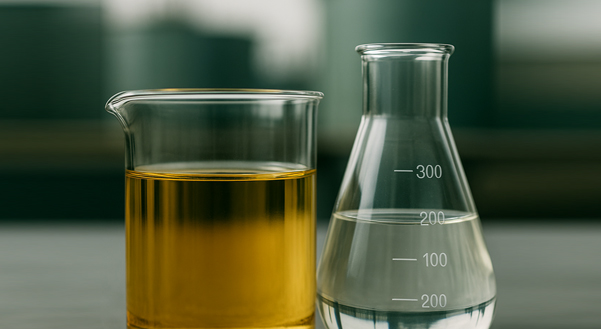
Gasoline and middle distillates form a large conveying range. Pumps must not only operate efficiently, durably and powerfully, but also cover a particularly large flow range. At a flow rate of 78 m³/h, one rail tank car is connected to the suction line; at 380 m³/h, several rail tank cars are connected. This option is common practice, particularly in larger tank terminals, because it saves time.
| Temperature range: | -10–30 °C |
| Viscosity: | 0.8–10 mPas |
| Flow rate: | 78–380 m³/h |
| Suction pressure: | -0.5 bar |
| Differential pressure: | 6.0 bar |
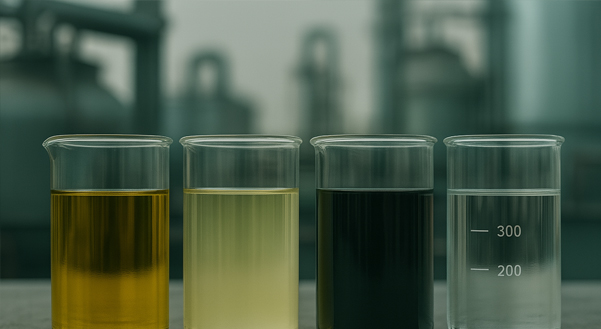
In the large conveying range of gasoline, middle distillates, crude oil and water, mobile residual pumps are used in addition to unloading pumps. Due to the gas-liquid mixtures inside the tanks, these pumps must be designed for ATEX Zone 1. Good suction properties during dry priming are particularly important.
| Temperature range: | -10–30 °C |
| Viscosity: | 0.75–400 mPas |
| Flow rate: | 10–40 m³/h |
| Suction pressure: | -0.5 bar |
| Differential pressure: | 6.5 bar |
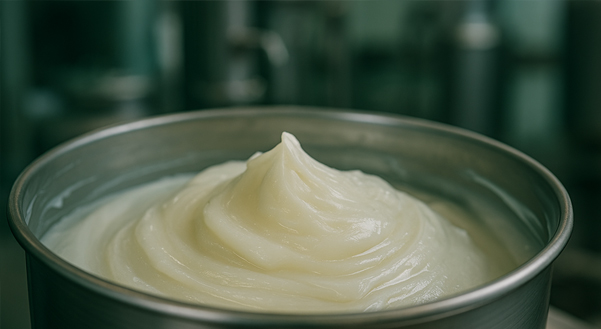
Fatty alcohols, which can be used as a base for many creams and ointments, are produced petrochemically from crude oil. A pump operating in reversible mode is required for conveying them: liquids are transferred in one direction and discharged again in the other. Single-flow screw pumps are ideally suited as receiving and transfer pumps.
| Temperature range: | 45–80 °C |
| Viscosity: | 1–12 mPas |
| Flow rate: | 100 m³/h |
| Suction pressure: | -0.7 bar |
| Differential pressure: | 3–4 bar |
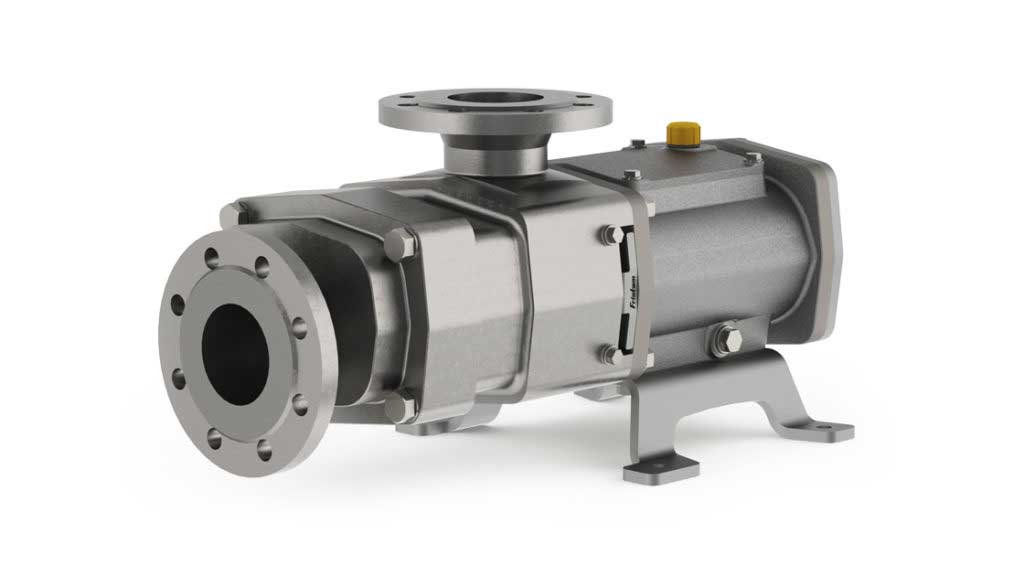
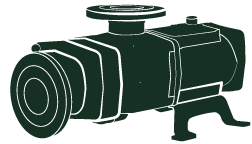
The VPS series is the all-rounder among our products: a single-flow design available in five different sizes.
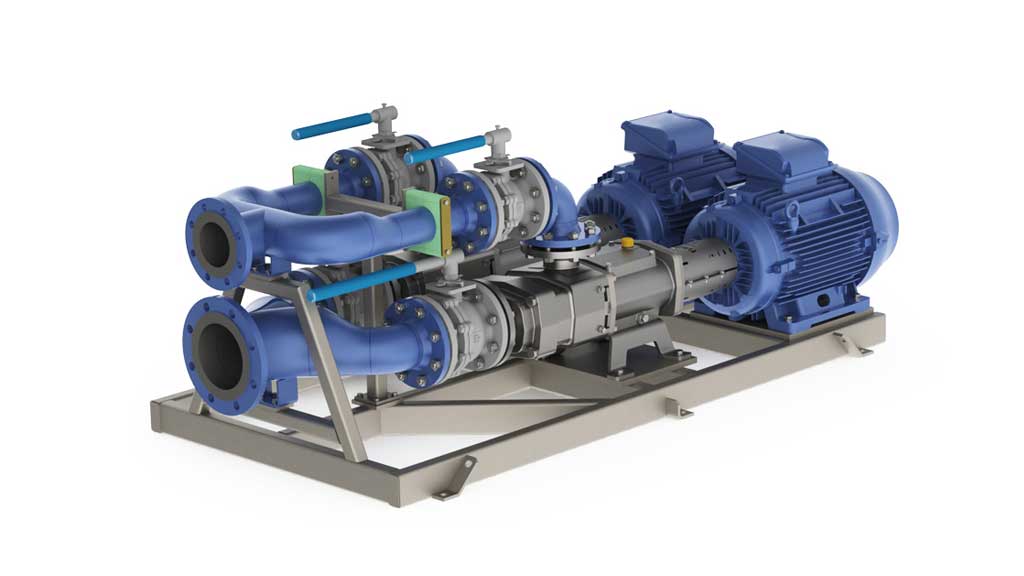
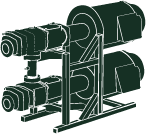
The VPS Flow Pack is designed for higher flow rates and low to medium pressures.
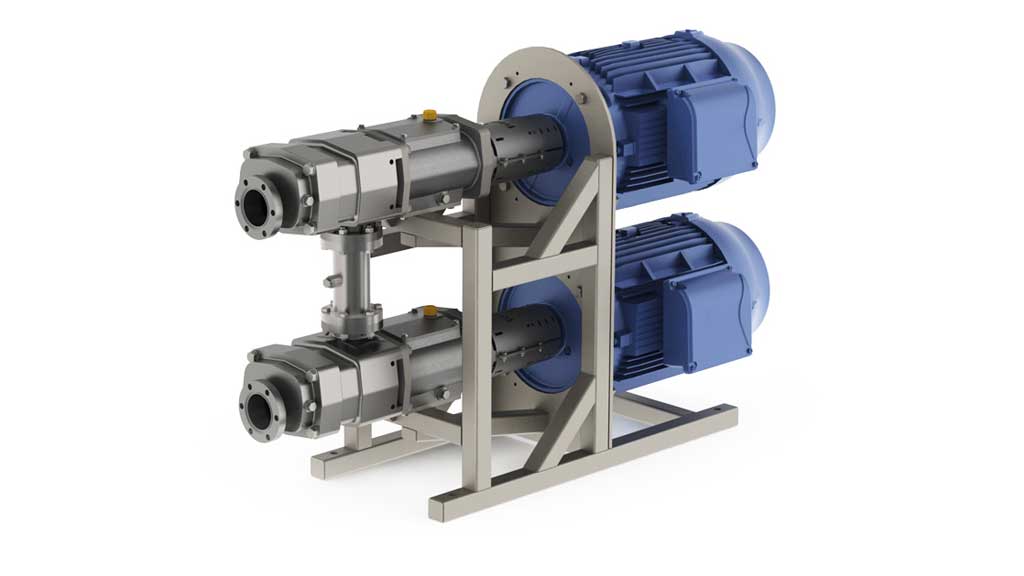
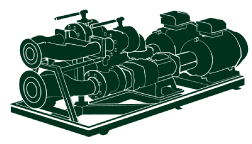
VPS Power Pack is a unit with two VPS pumps in series, designed for pressures of up to 50 bar.
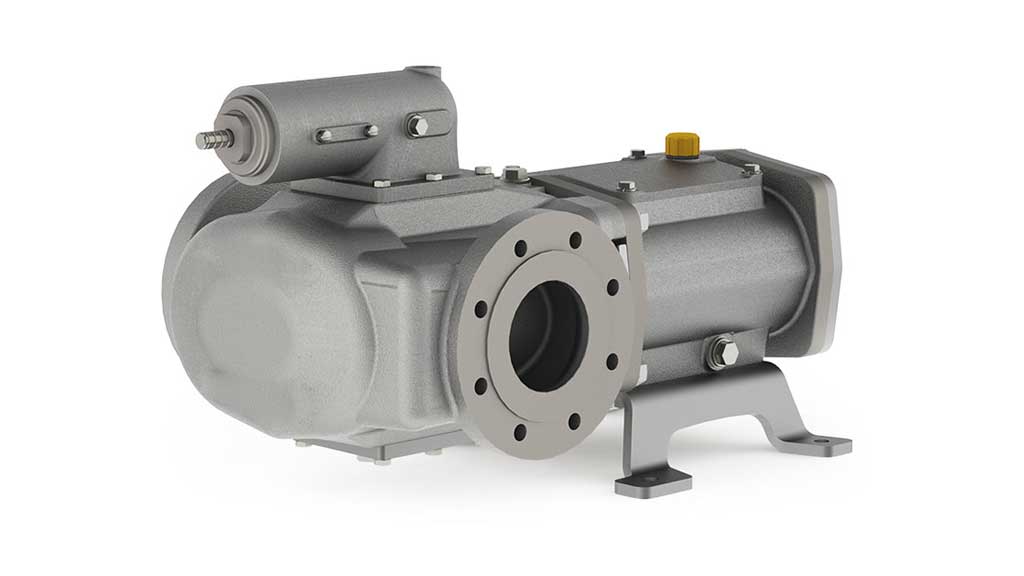
The inline version of the VPS, called VPS, is particularly easy to install.
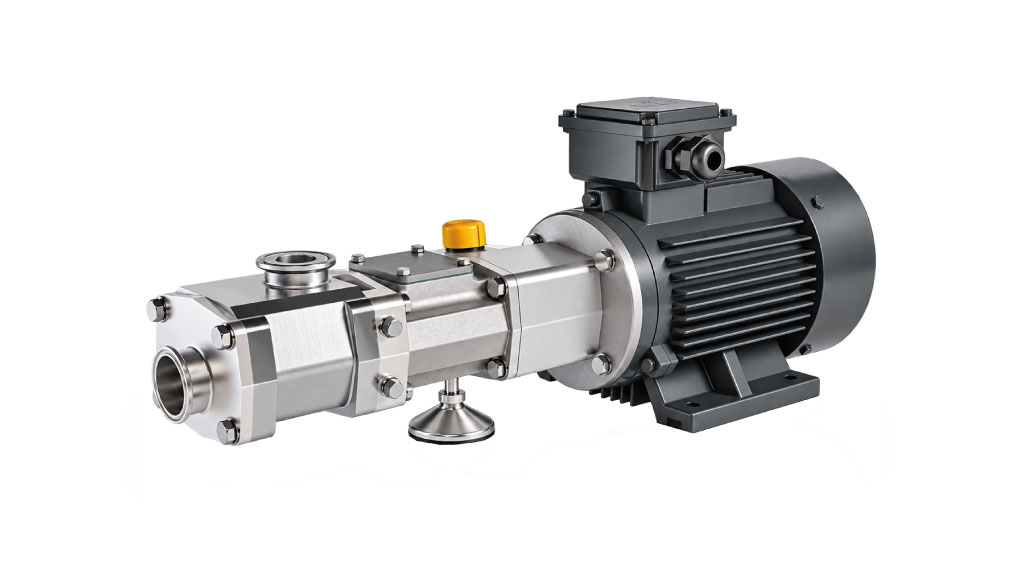
The world's smallest twin screw pump – for precise dosing and reliable conveying across a wide range of viscosities.

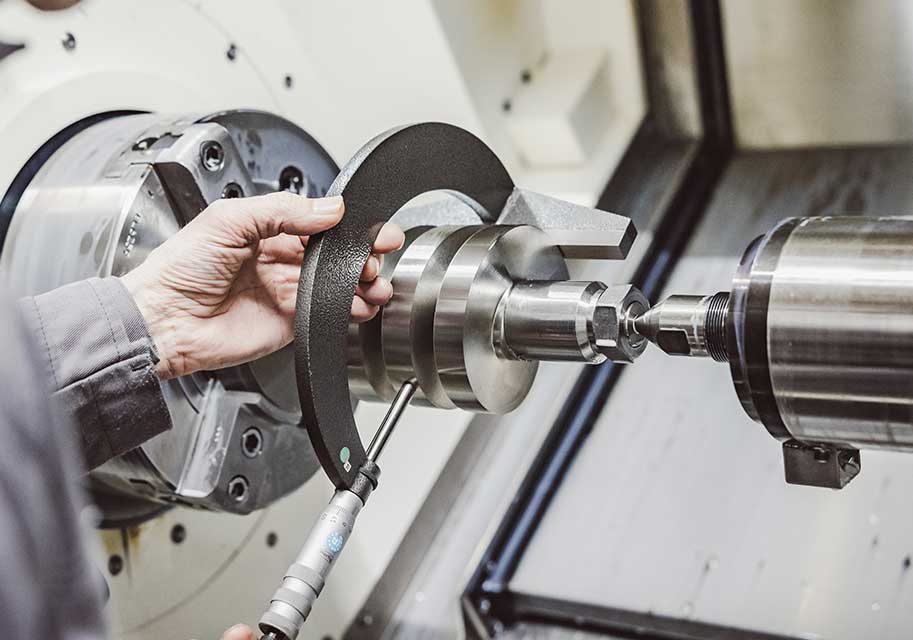
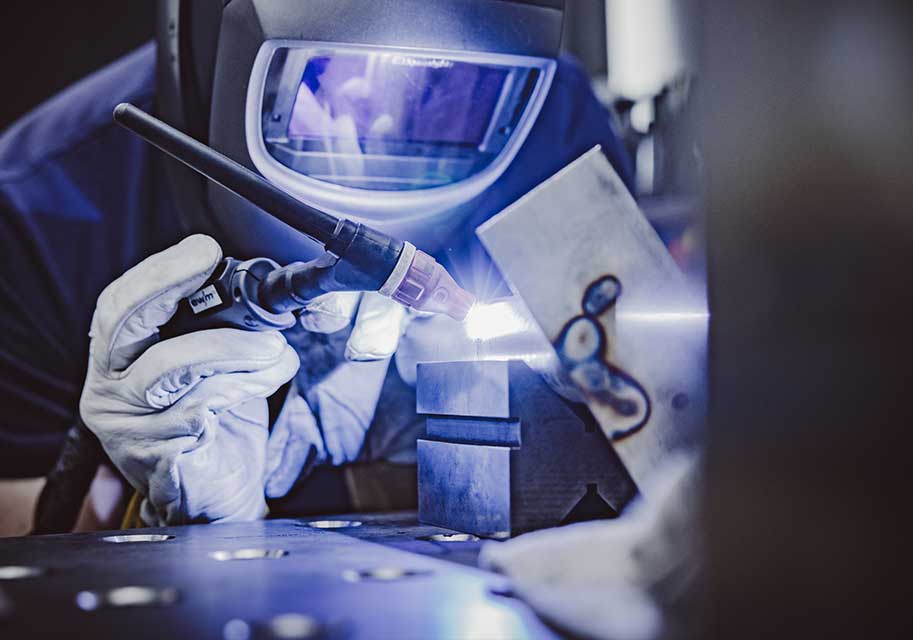
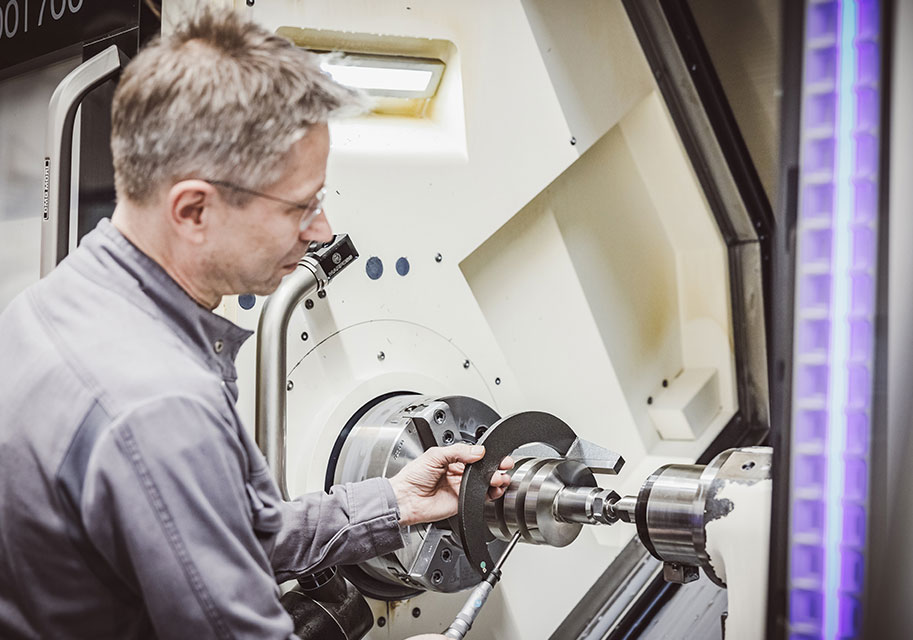
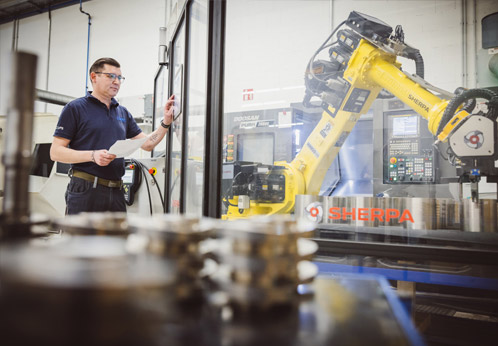
Our plant in Stadthagen is the central site for development, engineering and manufacturing. Certified processes according to ISO 9001, short communication channels and a high level of in-house production ensure consistent quality, reliable delivery and dependable results.

Our quality management system is certified according to ISO 9001. This stands for verified processes, continuous improvement and products you can rely on.
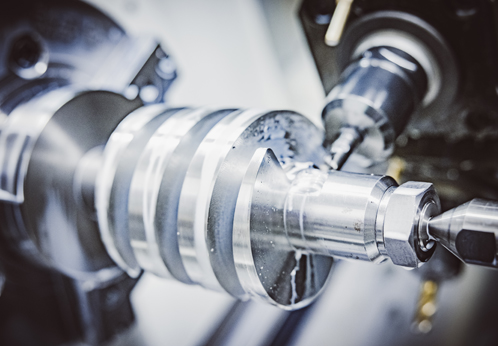
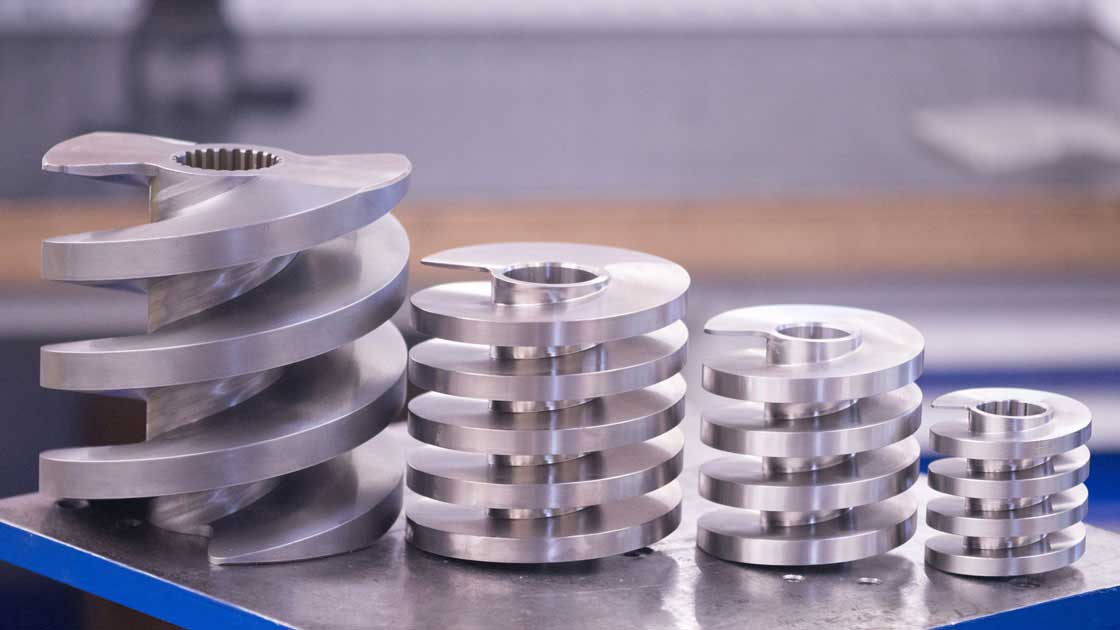
VPS technology is based on a robust single-flow screw spindle design. Thanks to flexible configuration, the pumps can be precisely adapted to the medium, flow rate and operating conditions – for processes with high availability.

Development, engineering and manufacturing take place at our Stadthagen site. This results in precisely manufactured products with short communication channels and reliable quality.
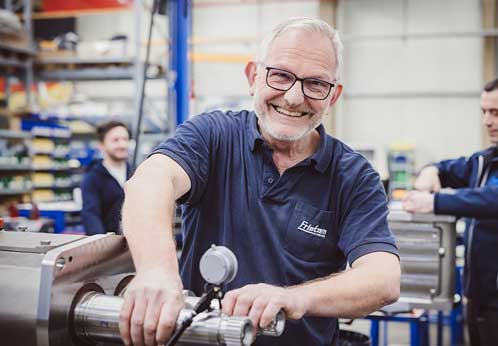
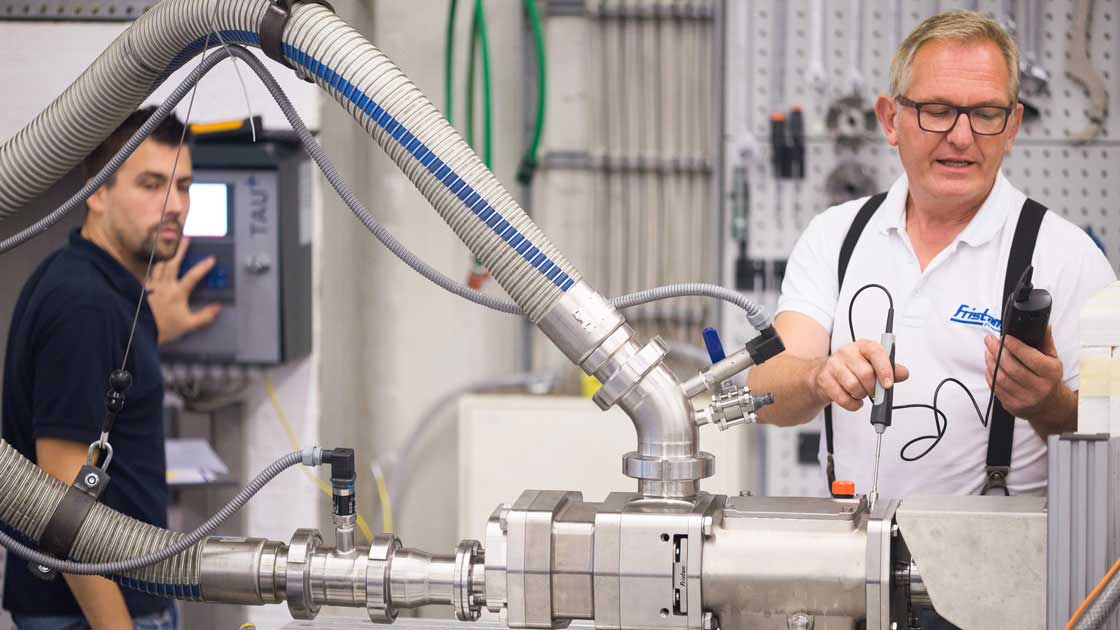
Our service team supports you with commissioning, maintenance, inspections, repairs and spare parts. Clear contacts, fast response times and practical support help prevent downtime and keep systems operating safely over the long term.


Working at FRISTAM Pumpen Schaumburg
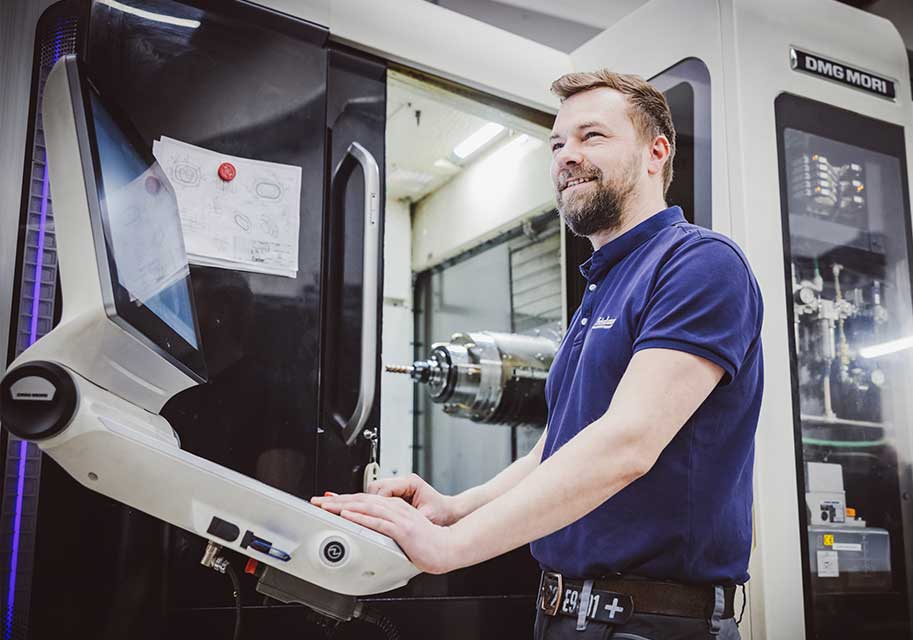
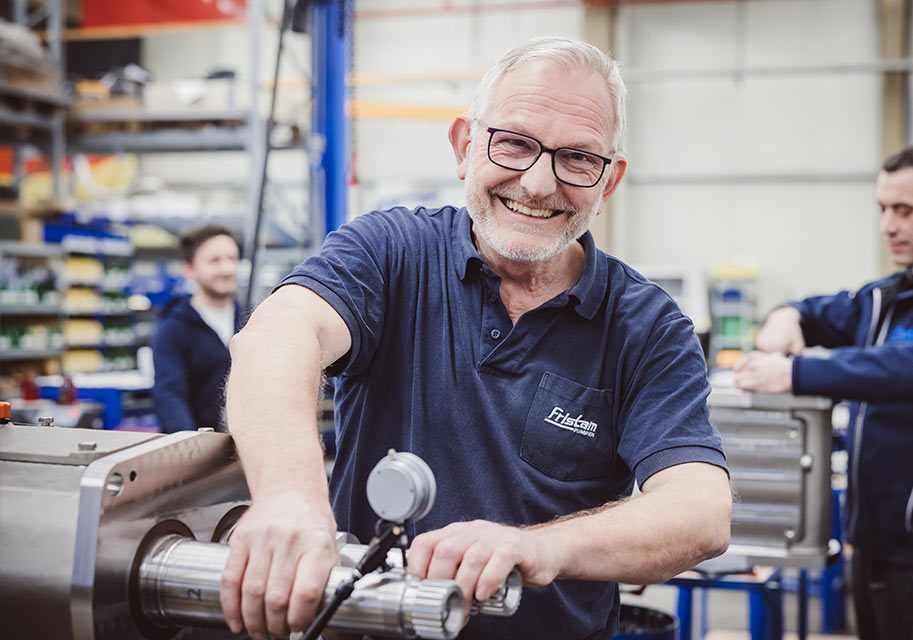
Connected as a team – with technology and people
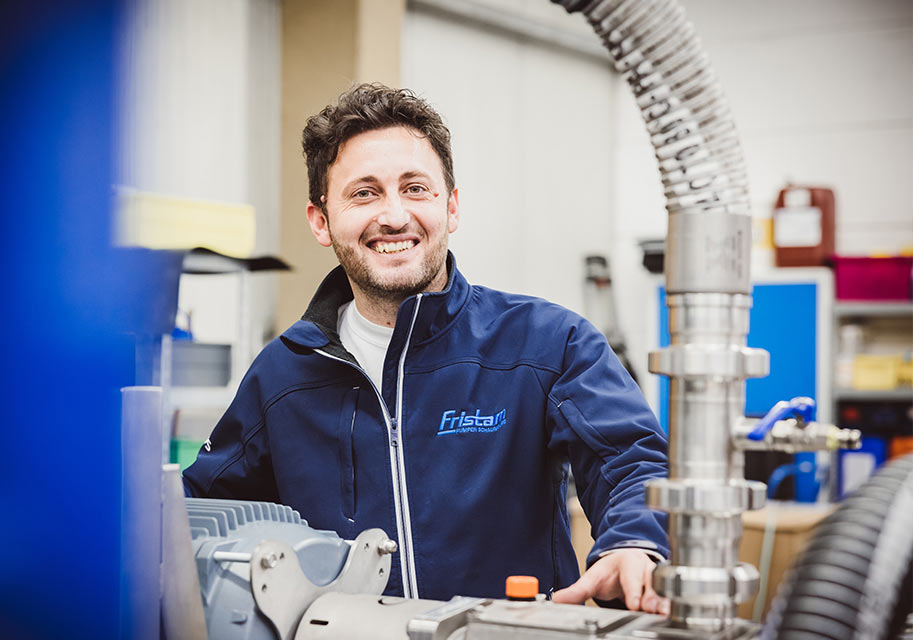
FRISTAM Pumpen Schaumburg stands for high-quality pump technology – and for a team that works together on solutions.
We operate internationally and offer a wide range of responsible tasks. At the same time, we value an open working atmosphere and direct communication.
Whether you already have many years of professional experience or are just starting your career – with us, you will find an environment where quality, commitment and collegiality matter. Discover exciting tasks, long-term prospects and the opportunity to contribute your own ideas.


 Home
 Application Filter
 Screw Pumps
 Company
 Jobs
 Contact