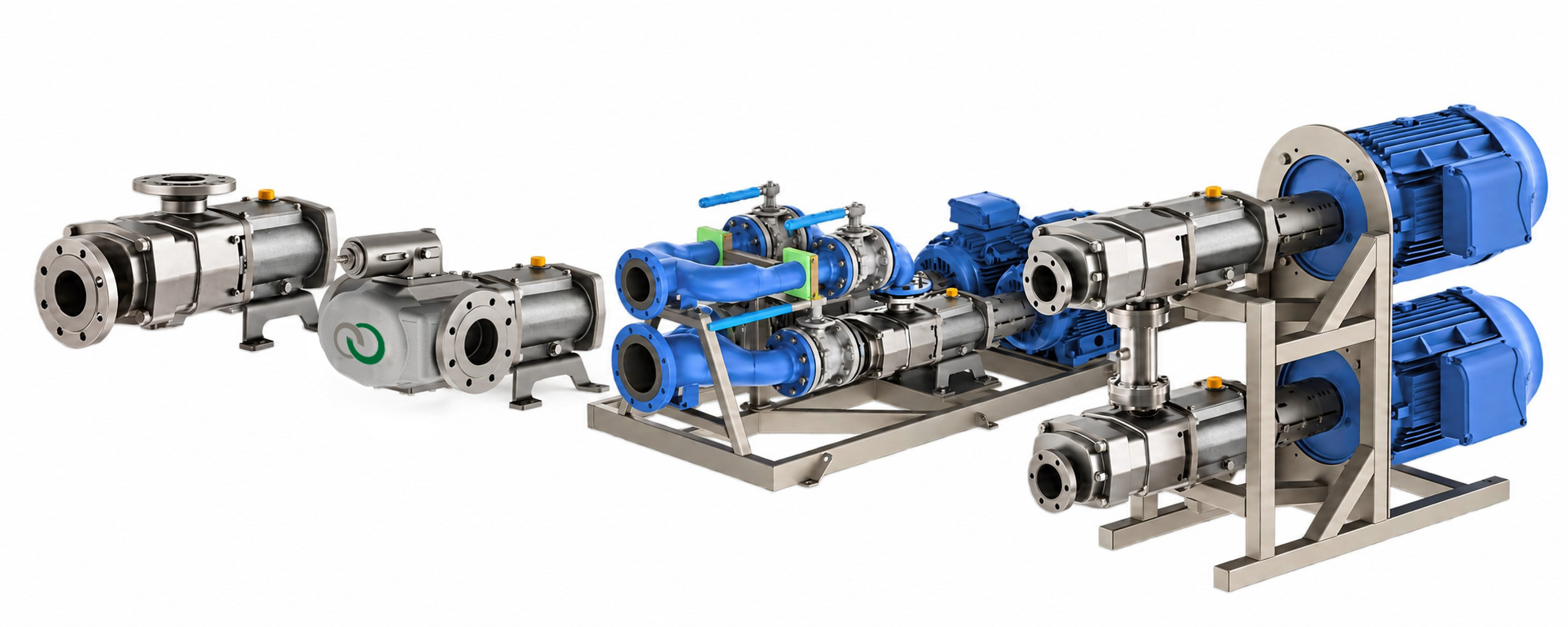
FRISTAM Pumpen Schaumburg
Pumps for Oil and Gas
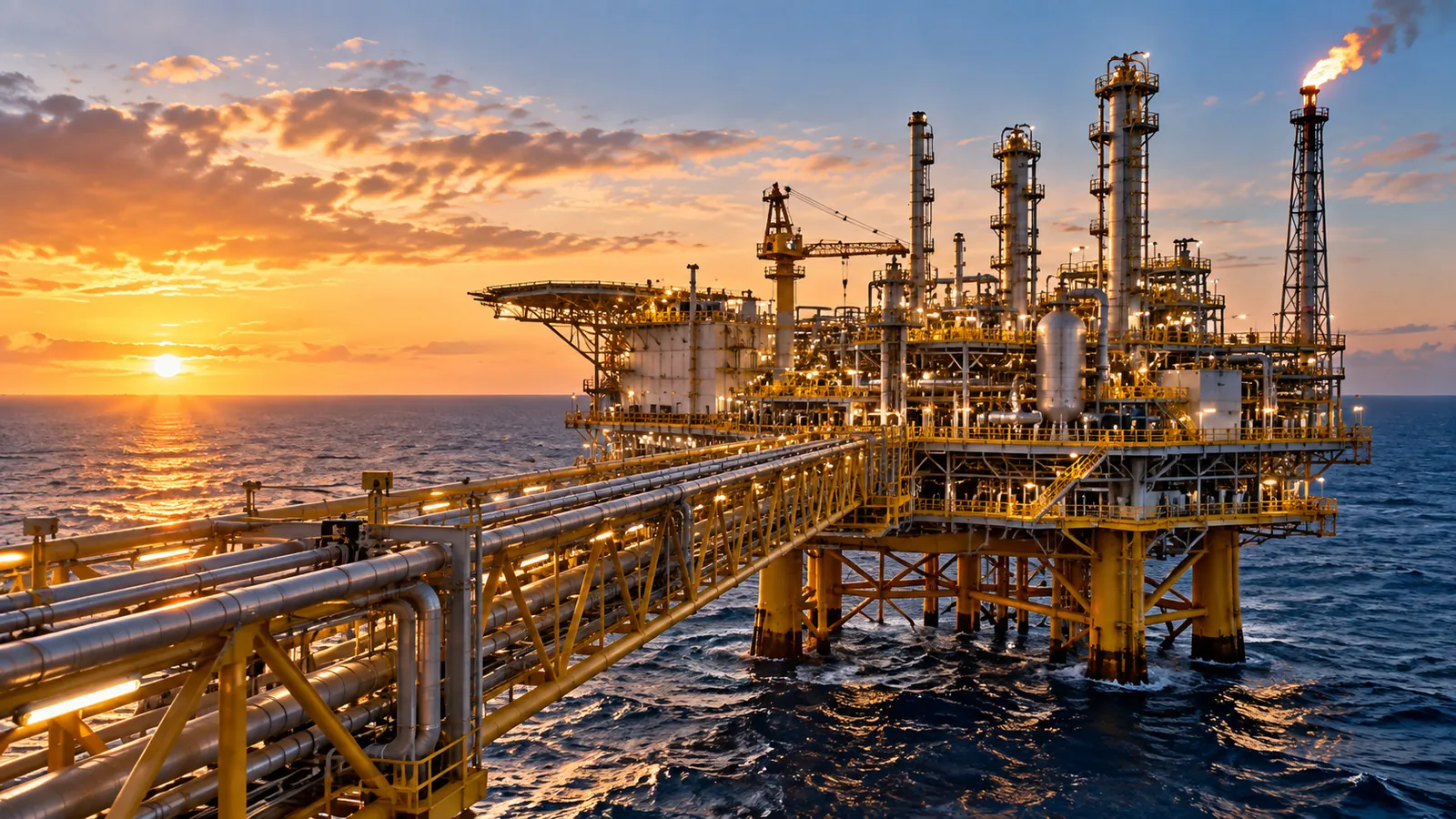
When conveying multiphase mixtures of oil, water and gas, the composition, gas content and pressure conditions can change during operation. VPS pumps are designed for these varying conditions and provide reliable conveying in demanding oil and gas applications.
VPS pumps boost pressure between the well and separator station while handling changing gas and liquid fractions. By reducing wellhead pressure, they can improve crude oil flow conditions and support existing production systems.
Typical Processes
Design
| Number of wells | 3 |
| Lift system | Downhole / piston pumps |
| Suction pressure | 2 bar(g) |
| Outlet pressure | 3 bar(g) / 15 bar(g) |
| Differential pressure | 9 bar |
| Capacity | approx. 30 m³/day liquid (80 % oil, 20 % water) + 4,000 Sm³/day gas |
| Volume flow | 35 m³/h |
| Gas fraction | 92 % |
| Medium temperature | 10–15 °C |
When conveying wet oil, crude oil and formation water must be transported reliably without unnecessarily remixing phases that have already separated. Gentle conveying and low-pulsation operation are therefore particularly important.
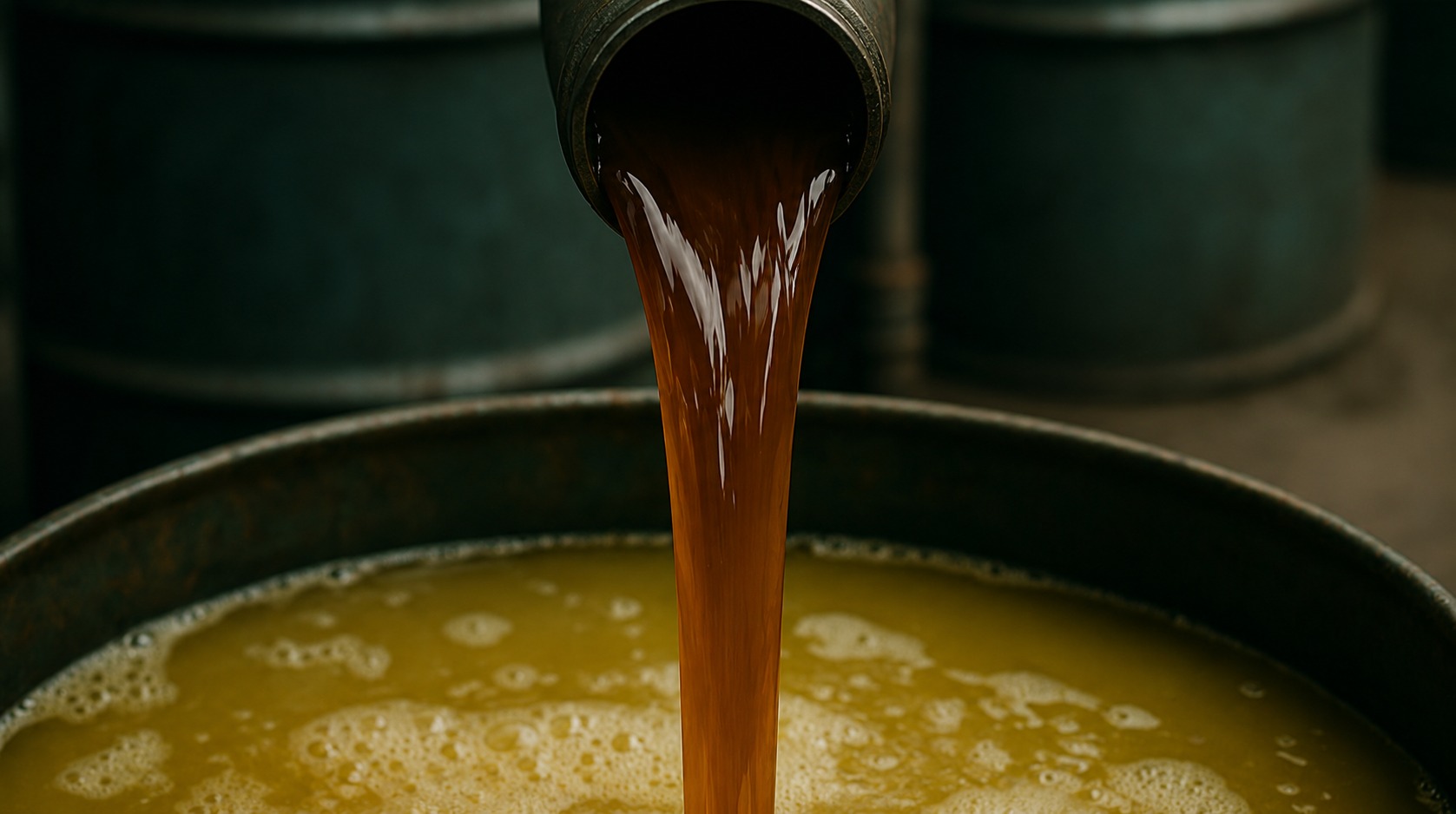
VPS pumps are suitable for transferring crude oil containing formation water. Their gentle, low-shear conveying helps prevent already separated crude oil from being unnecessarily remixed with remaining water. This makes the pumps well suited for transfer duties between tanks, separators and downstream process stages.
Typical Processes
Design
| Temperature range | 40–50 °C |
| Viscosity | 1–100 mPas |
| Flow rate | 3–15 m³/h |
| Differential pressure | 7 bar |
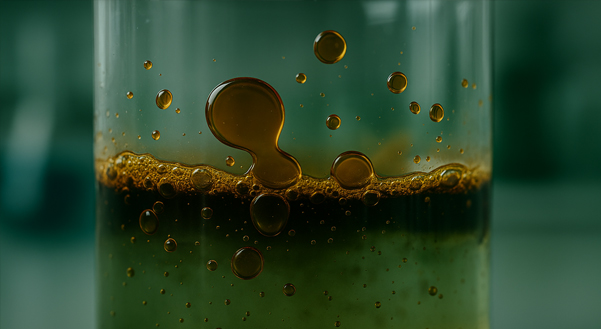
During crude oil production, formation water may be present in varying proportions. For reliable downstream processing, it is important to keep oil and water separated as far as possible and to convey the crude oil gently from the tank.
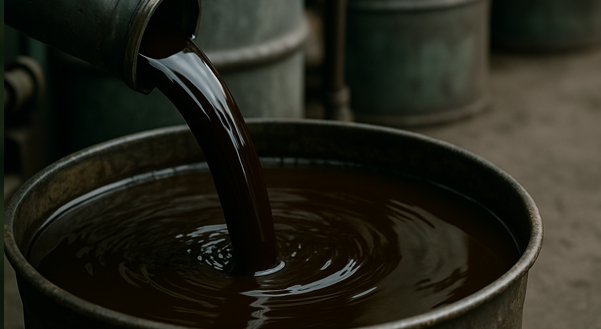
In the crude oil tank, the mixture separates due to differences in density: water settles at the bottom while the oil collects above it. VPS pumps gently draw off the crude oil from the upper tank area and transfer it reliably to the clean oil tank without unnecessarily remixing the separated phases.
Typical Processes
Design
| Temperature range | 45 °C |
| Viscosity | 50 mPas |
| Flow rate | 1.5–5 m³/h |
| Differential pressure | 6 bar |
Configure your pump
Depending on the medium, viscosity, temperature and pumping task, different pump configurations may be required. Find the right FRISTAM solution for your application.